
 Pin It
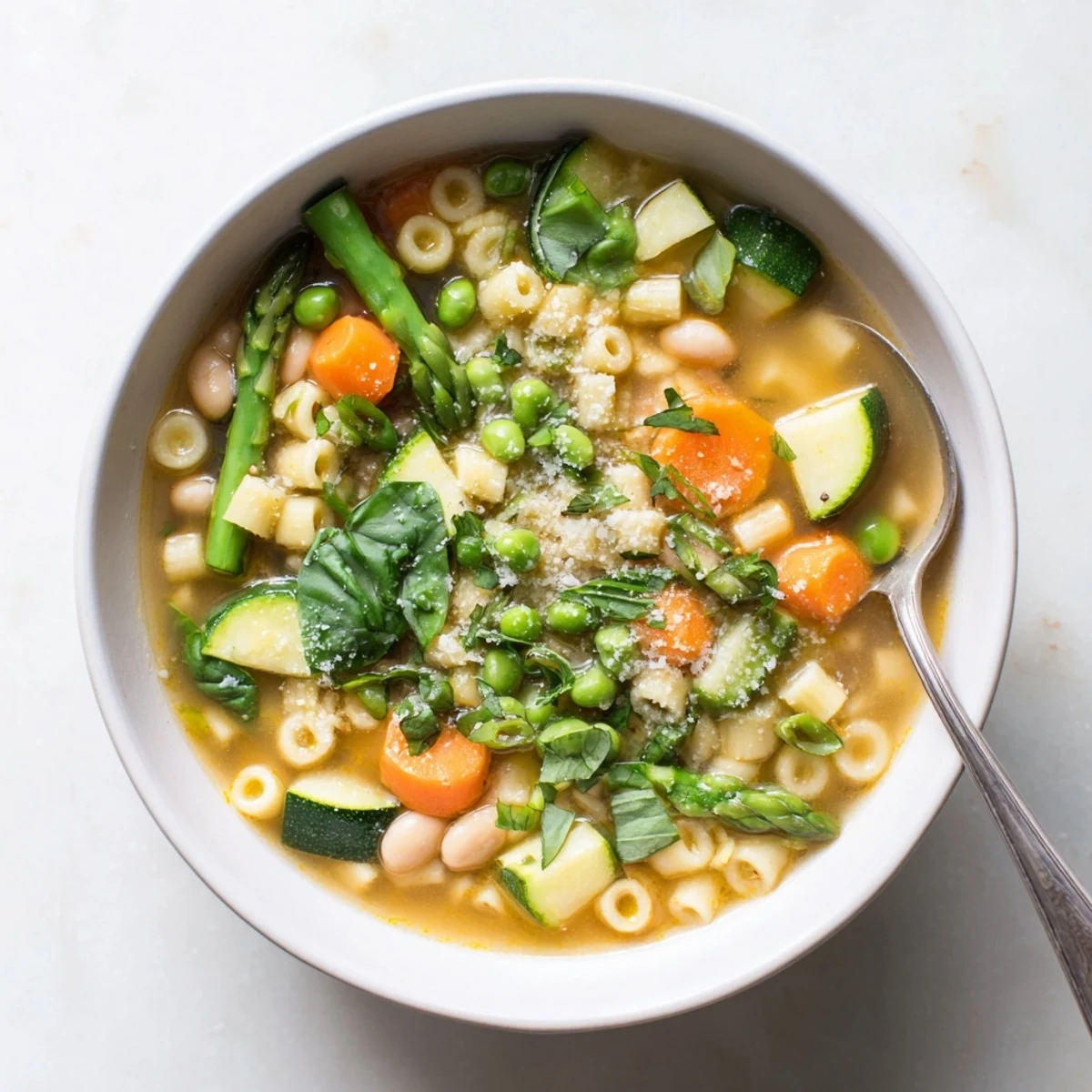
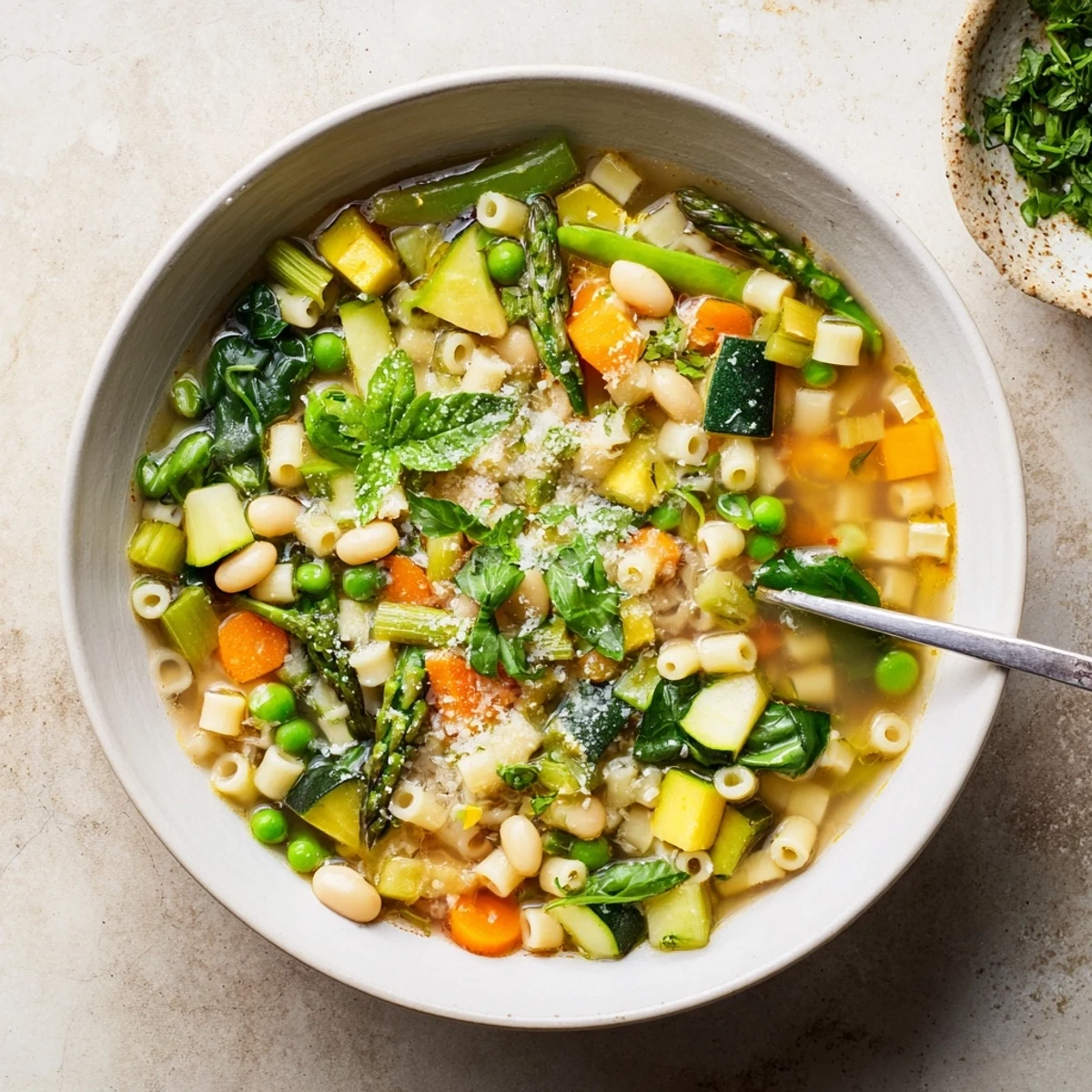
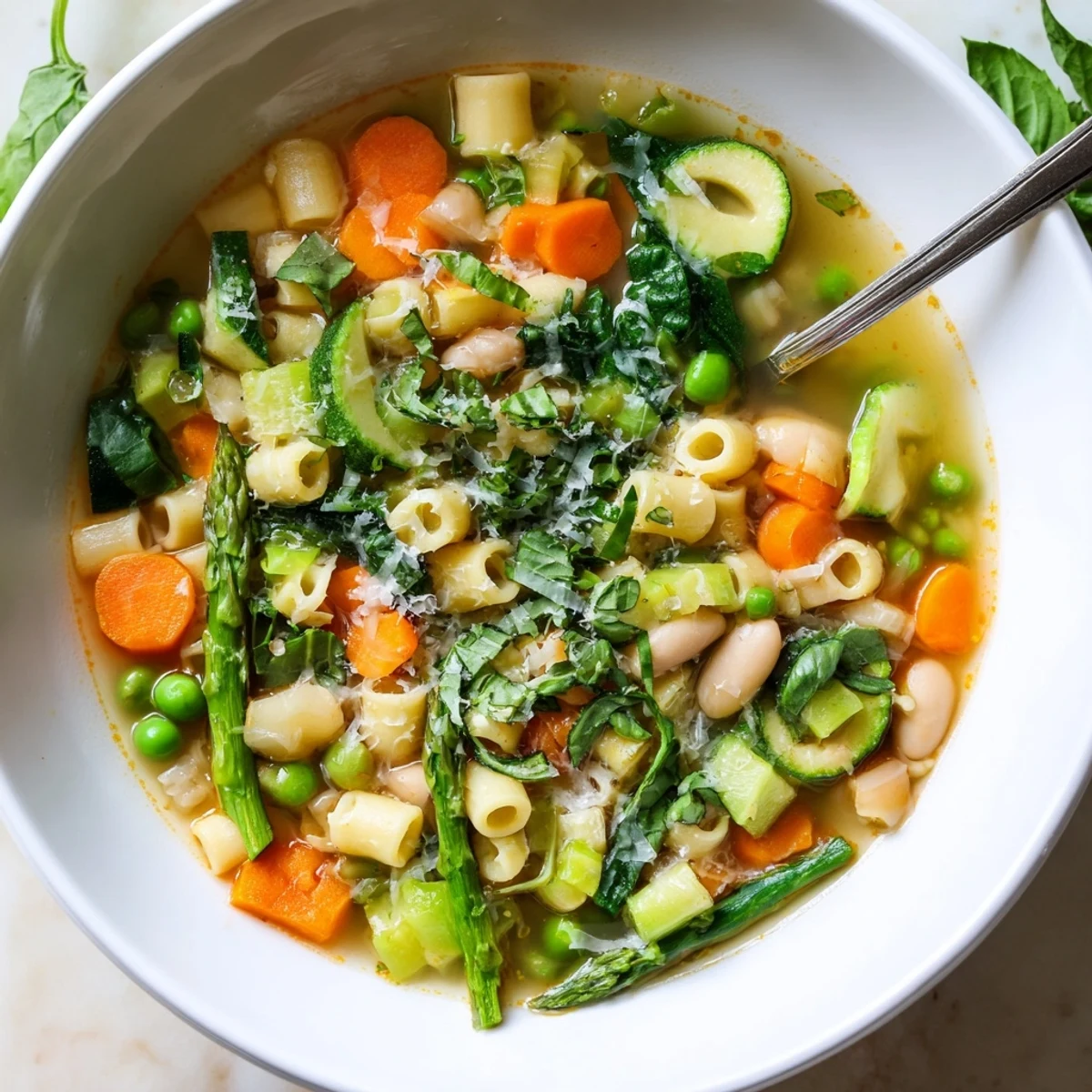
 This bright, nourishing minestrone brings together the best of spring produce in one pot. Asparagus, zucchini, peas, and baby spinach simmer alongside cannellini beans and ditalini pasta in a savory vegetable broth. Fresh basil, parsley, and a squeeze of lemon lift every bowl, while optional Parmigiano Reggiano adds a savory finish. Ready in under 45 minutes, it pairs perfectly with crusty bread and a glass of Pinot Grigio for an effortless seasonal meal.
There was a Saturday in late March when the farmers market suddenly looked like a completely different place, tables overflowing with asparagus and pea shoots, and I came home with way more than I needed. That surplus turned into this soup, barely planned, just a big pot and whatever smelled freshest.
I made a batch for my neighbor who was recovering from surgery, and she called it the best thing anyone had ever brought her. The fact that it took me under an hour and used mostly things I already had in the fridge made it feel like a small kitchen victory.
Ingredients
- Olive oil: A good extra virgin matters here since it is the only fat in the base and you will taste it
- Onion and garlic: Finely chopped so they melt into the broth rather than leaving chunky bits
- Carrots: Diced small so they cook at the same rate as the softer spring vegetables
- Asparagus: Cut into one inch pieces, trimming and discarding the woody ends first
- Zucchini: Diced to match the carrots for even cooking and a clean bite
- Peas: Fresh ones are worth seeking out but frozen work perfectly fine in a pinch
- Baby spinach: Added at the very end so it stays bright and tender
- Vegetable broth: Use a low sodium version so you control the salt level yourself
- Cannellini beans: Rinsed well to remove the starchy can liquid that can cloud the soup
- Small pasta: Ditalini holds its shape best but orzo works if that is what you have
- Salt and black pepper: Season in layers rather than all at once at the end
- Fresh basil and parsley: Do not substitute dried herbs here because the freshness is the whole point
- Lemon juice: Added off the heat so the bright flavor stays intact
- Parmigiano Reggiano: Optional but it turns a good soup into something you crave
Instructions
- Build the base:
- Heat olive oil in a large pot over medium heat and cook the onion for about three minutes until it goes soft and translucent. You want it sweet, not browned.
- Add the aromatics:
- Stir in the garlic and diced carrots, cooking for two to three minutes until the kitchen smells incredible and the garlic turns fragrant but not golden.
- Bring in the spring vegetables:
- Add the asparagus, zucchini, and peas, stirring occasionally for two minutes so everything gets coated in the oil.
- Simmer with broth and beans:
- Pour in the vegetable broth and bring it to a boil, then add the cannellini beans and pasta. Reduce the heat, cover, and let it simmer for eight to ten minutes until the pasta is tender.
- Finish with greens and herbs:
- Stir in the spinach, basil, and parsley, cooking just one to two minutes until the spinach wilts and the herbs release their aroma.
- Season and serve:
- Remove from heat, stir in the lemon juice, and adjust salt and pepper to taste. Ladle into bowls and finish with grated Parmigiano Reggiano if you are using it.
 Pin It
 My daughter, who at the time refused anything green, ate two bowls without a single complaint. I did not point out the spinach or the zucchini and I still think that was the right call.
Swapping in What You Have
Fava beans, green beans, or even sliced leeks can replace any of the spring vegetables without changing the character of the soup. The real rule is just to keep everything cut to roughly the same size so each spoonful feels balanced.
Making It Vegan
Omit the Parmigiano Reggiano or swap in a good plant based parmesan alternative. The soup is so flavorful from the fresh herbs and lemon that you genuinely will not miss the cheese.
Serving and Storing
This soup thickens considerably in the fridge as the pasta absorbs broth, so add a splash of water or extra broth when reheating leftovers. It keeps well for three days and the flavors actually improve overnight.
- Crusty bread is not optional, it is essential for soaking up the broth
- A light Pinot Grigio pairs beautifully if you want to make it a proper meal
- Portion into containers before the pasta gets too soft if you are meal prepping
 Pin It
 A pot of this on the stove is my favorite way to announce that spring has actually arrived. Even if the weather disagrees, the bowl does not lie.
Recipe FAQ
- → Can I make this minestrone ahead of time?
-
Yes, the soup reheats beautifully. Store it in an airtight container in the refrigerator for up to 3 days. The pasta may absorb some broth, so add a splash of vegetable broth when reheating.
- → What pasta works best in spring minestrone?
-
Small shapes like ditalini, orzo, or small shells are ideal because they spoon up easily with the vegetables. Use gluten-free pasta if needed.
- → How do I make this vegan?
-
Simply skip the Parmigiano Reggiano garnish or replace it with a plant-based cheese alternative. The rest of the soup is naturally vegan.
- → Can I freeze spring minestrone?
-
You can freeze it for up to 2 months, though the pasta texture may soften slightly. For best results, cook the pasta separately and add it when reheating.
- → What other spring vegetables can I add?
-
Fava beans, green beans, leeks, or even thinly sliced radishes work well. Swap in whatever looks fresh at the market.
- → Is this soup suitable for meal prep?
-
Absolutely. It makes four generous servings and stores well. Divide into individual containers for easy weekday lunches.