
 Pin It
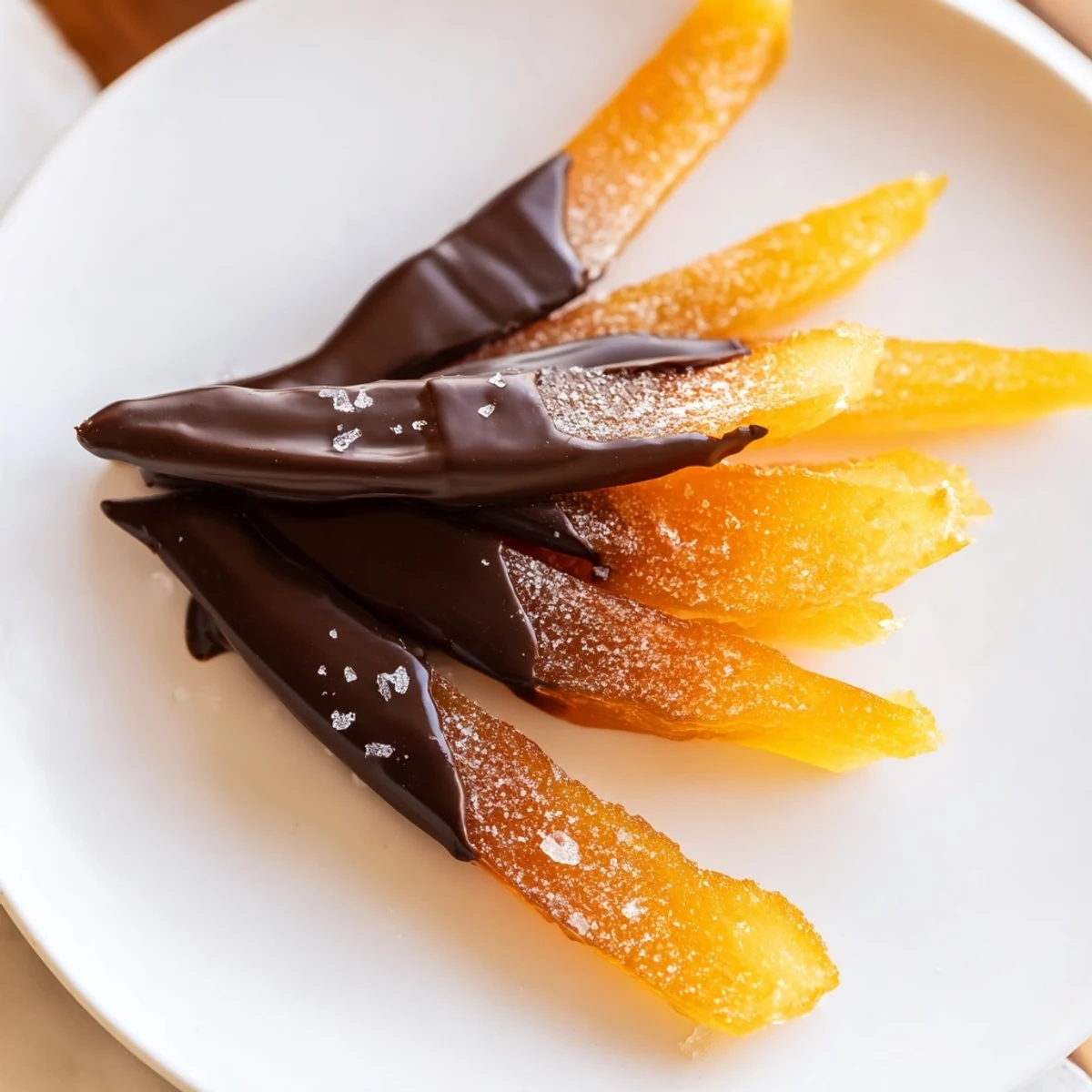
 Chocolate covered orange peels are a classic European confection that transforms humble citrus into an elegant treat. Fresh orange peels are blanched to remove bitterness, then slowly simmered in sugar syrup until translucent and tender.
Once dried, each candied strip is dipped halfway into melted dark chocolate and left to set. A sprinkle of flaky sea salt adds a sophisticated finish. The result is a beautifully glossy, zesty-sweet indulgence with a satisfying contrast between the bittersweet chocolate and the chewy, fragrant candied peel.
The smell of oranges and melting chocolate together is one of those things that stops you mid sentence. I discovered these chocolate covered orange peels during a rainy afternoon experiment that went surprisingly right, and now they show up at every holiday gathering I host. There is something magical about transforming something you would normally throw away into a genuinely elegant treat.
I brought a tin of these to a friends housewarming party last winter and watched three adults forget about the cheese board entirely. My friend Laura now texts me every December asking if the orange peels are happening again, and honestly that is the only validation I need.
Ingredients
- 3 large oranges: Use thick skinned navel oranges if you can find them because they give you more peel to work with and hold their shape beautifully.
- 1 cup granulated sugar: Plain white sugar creates the clearest syrup and lets the orange flavor shine without competition.
- 1 cup water: Combined with the sugar to form the candying syrup that transforms raw bitter peels into something jewel like and tender.
- 200 g dark chocolate at least 60% cocoa: Do not skimp on quality here because the chocolate is half the experience and cheap chocolate will taste waxy.
- 1 tsp flaky sea salt optional: A tiny sprinkle of salt on top of dark chocolate and orange is one of those small touches that makes people close their eyes when they bite in.
Instructions
- Prep the oranges:
- Wash the oranges thoroughly under warm water, then score each peel from top to bottom in four vertical lines. Gently pry the peel away in quarters, keeping a thin layer of white pith attached because it adds texture and helps the peels hold together during cooking.
- Cut into strips:
- Slice each peel quarter into strips roughly half a centimeter wide, trying to keep them fairly uniform so they candy evenly. This is the part where you can put on music and settle in because it takes a few minutes of steady knife work.
- Blanch the bitterness away:
- Put the strips in a saucepan, cover with cold water, bring to a rolling boil for two minutes, then drain completely. Repeat this process two more times for a total of three blanches, which sounds tedious but is the single most important step for removing the harsh bitterness.
- Make the syrup:
- In the same saucepan, combine the sugar and water, stirring over medium heat until the sugar fully dissolves and the liquid runs clear. You want a gentle simmer here, not a vigorous boil, because you are looking for a syrup that will slowly penetrate the peels.
- Candy the peels:
- Add the blanched peels to the simmering syrup and let them cook gently for about forty minutes, stirring occasionally so nothing sticks. You will know they are ready when the peels look translucent and the syrup has thickened to a loose honey consistency.
- Dry the peels:
- Using tongs, lift each strip from the syrup and lay it on a wire rack set over a sheet of parchment paper to catch drips. Let them dry for at least an hour until the surface is tacky but not wet, which helps the chocolate adhere properly later.
- Melt the chocolate:
- Set a heatproof bowl over a saucepan of barely simmering water and add the chocolate, stirring gently until it is completely smooth and glossy. You can also microwave in short twenty second bursts, stirring between each, but the double boiler method gives you more control.
- Dip and finish:
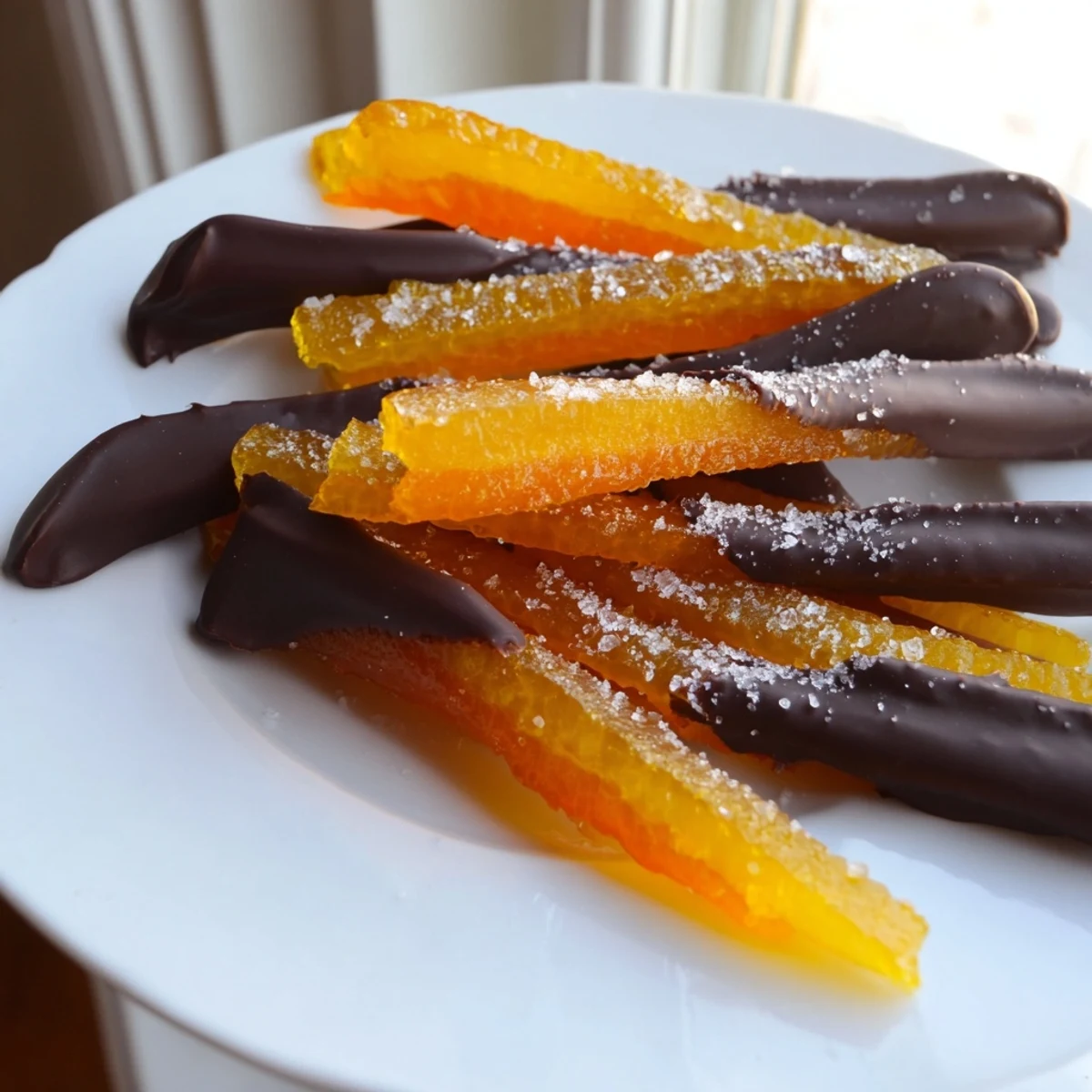
- Dip each candied strip halfway into the melted chocolate, letting the excess drip back into the bowl, then place it carefully on a fresh sheet of parchment paper. Sprinkle with flaky salt if you are using it, then leave them at room temperature for about thirty minutes until the chocolate sets completely.
 Pin It
 There is a specific quiet satisfaction in arranging these on a plate and watching someone pick one up, expecting something ordinary, and then watching their expression change completely.
How to Store Them
Keep the finished peels in a single layer in an airtight container at room temperature and they will stay perfect for up to two weeks. If your kitchen runs hot, the refrigerator is fine but let them come back to room temperature before serving so the chocolate regains its snap.
Citrus Swaps Worth Trying
Grapefruit peels work beautifully and give you a more complex, slightly astringent flavor that pairs incredibly well with very dark chocolate. Lemon peels are sharper and brighter, almost candied lemon drop territory, and they look stunning against the dark coating.
A Few Final Thoughts
Tempering the chocolate before dipping gives you that professional glossy finish and a firmer snap, but honestly straight melting works fine for home batches. The first time you make these, expect a bit of mess and a few imperfectly dipped pieces that you will just have to eat yourself.
- Save any leftover orange syrup from the candying pot because it makes an incredible cocktail sweetener.
- A dipping fork or even a regular dinner fork gives you more control than using your fingers.
- These make some of the best homemade gifts you can give, especially in a simple kraft box with a handwritten label.
 Pin It
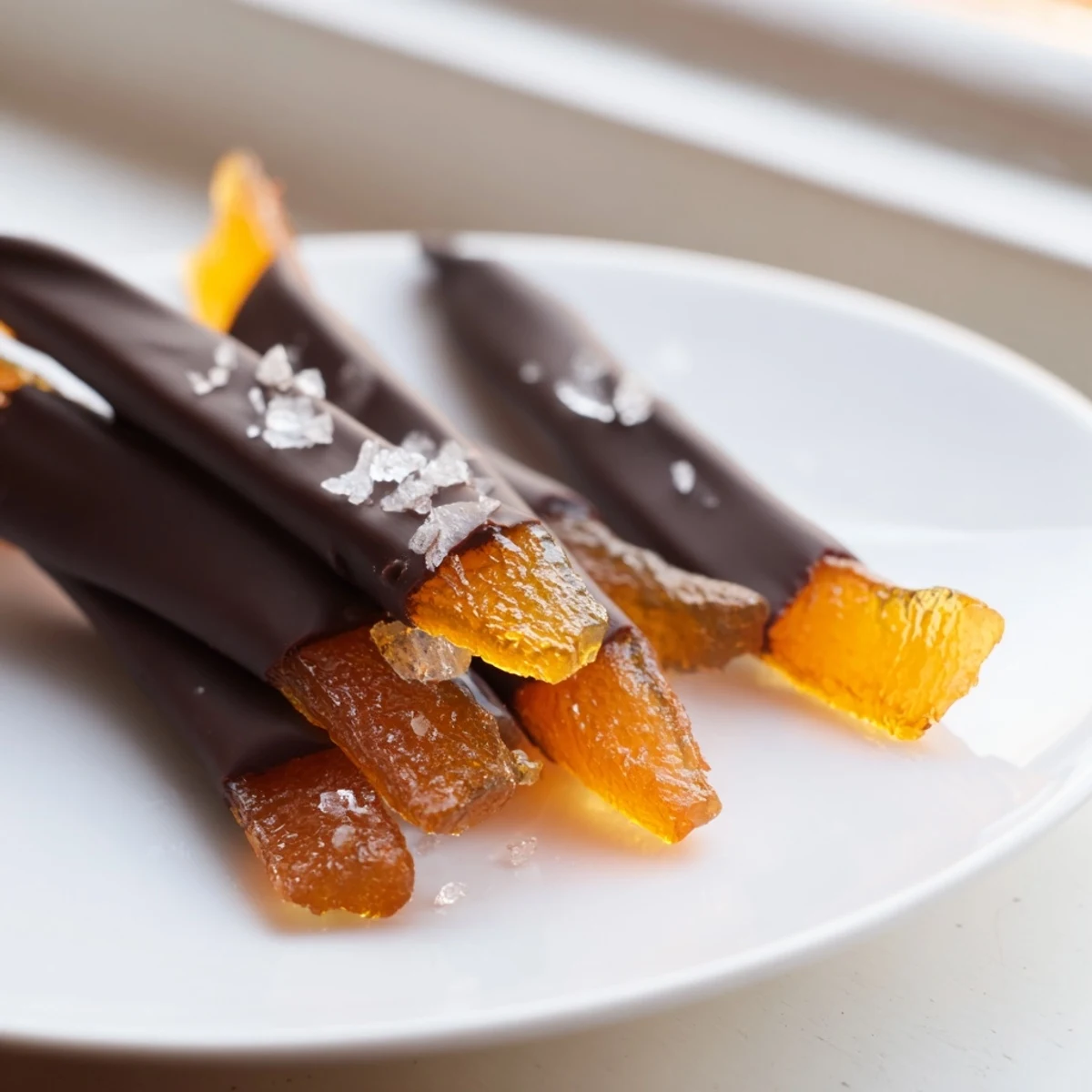
 Once you realize how simple these are, you will start eyeing every citrus fruit in your kitchen as potential candy. That impulse is completely justified and should be encouraged.
Recipe FAQ
- → How do I reduce the bitterness in orange peels?
-
Blanching the peels three times in boiling water is essential. Each 2-minute boil draws out bitter compounds from the white pith. Don't skip this step — it makes the difference between pleasant citrus flavor and overwhelming bitterness.
- → What type of chocolate works best for dipping?
-
High-quality dark chocolate with at least 60% cocoa content is ideal. The bitterness balances the sweetness of the candied peel. Couverture chocolate yields the glossiest finish, but any good dark chocolate melts smoothly when properly tempered.
- → How long do chocolate covered orange peels stay fresh?
-
Store them in an airtight container at room temperature and they will keep for up to two weeks. Avoid refrigerating them, as condensation can cause the chocolate to bloom and lose its glossy appearance.
- → Can I use other types of citrus?
-
Absolutely. Grapefruit, lemon, and tangerine peels all work beautifully with the same candying and dipping method. Each citrus variety brings its own unique flavor profile to the finished confection.
- → Do I need to temper the chocolate?
-
Tempering isn't strictly necessary, but it produces a shinier, snappier coating that resists melting at room temperature. If you skip tempering, simply melt the chocolate gently and the results will still be delicious, just slightly less glossy.
- → Should I leave the white pith on the orange peels?
-
Keep a thin layer of white pith — it adds a pleasant chewy texture and helps the peel hold its shape during candying. The blanching process removes most of the bitterness from the pith, so it becomes a pleasant part of the finished treat.